

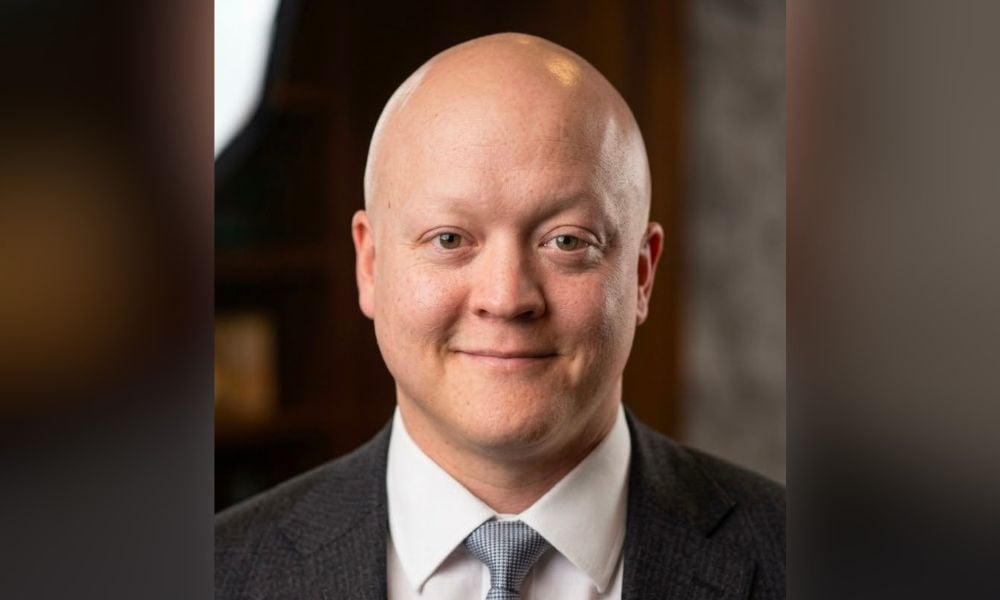
LNG Canada's joint venture partners have made a final investment decision (FID) on Phase 2, committing to double the capacity of the Kitimat, BC facility from 14 to 28 million tonnes per annum. For Bryan Morin, senior legal counsel at PetroChina Canada – which holds a 15 percent stake in the joint venture – the announcement is the public face of months of work his company has been doing behind the scenes.
The joint venture – between Shell, PETRONAS, PetroChina, Mitsubishi Corporation, and KOGAS – loaded its first export cargo in June 2025. Phase 2 is designated a Project of National Significance under Prime Minister Carney's government, and Morin is straightforward about the commercial rationale: LNG Canada moves Canadian natural gas to Asian markets where prices are substantially higher, while displacing fuels with significantly greater emissions.
"Behind the scenes, the whole team has helped out, whether on the governance side, looking at the underlying contracts to … [reaching] a phase where we would be comfortable with an FID," he says.


From BDP to CNOOC: building a foundation
Morin grew up in Calgary and began his legal career at Burnet, Duckworth & Palmer LLP in 2012, drawn to the firm's standing as the city's pre-eminent energy boutique. His first in-house move came when oil was trading at roughly $110 per barrel, and significant foreign investment in the oil sands seemed likely. He joined Nexen, the Calgary-based company now part of CNOOC International, and within months, oil had dropped to roughly $30. "I don't think anyone foresaw it," he says. While it had nothing to do with the actions of the company he was joining, it meant he was joining a different environment from the one he had expected.
From those years at CNOOC, Morin took one structural observation that has stayed with him: at a Chinese state-owned enterprise, strategy doesn't need to be shaped around the next earnings call. "They have that ability to do much more long-term planning," he says – what should these oil sands assets look like in five years, not next quarter – a perspective he has found consistently relevant.
From CNOOC, Morin moved to TransAlta for roughly four years of M&A-focused work, including transactions across Pennsylvania, New Hampshire, and Atlanta. The period that saw Alberta's coal contracts cancelled sharpened his sense of how directly government decisions can hit energy companies – a sensitivity he carried into every role that followed.
The IPO and a company built from scratch
Tidewater Midstream, which became the parent of Tidewater Renewables, attracted him for two specific reasons: the chance to help execute a TSX IPO for the renewables subsidiary and to oversee completion of what would become Canada’s first stand-alone renewable diesel refinery in Prince George, British Columbia. "I tend to move for really interesting things," he says, and both of those initiatives qualified.
The IPO was, by his own account, "the heaviest lift I've ever done in my career." Bank pitches, lengthy closing checklists, the interdependence of each step – the process was more dynamic than the prescribed path implied. The work that came after was equally formative: standing up Tidewater Renewables as an operating company from scratch, from IT systems to internal policies, while headcount grew from two or three employees post-close to somewhere in the 50s and 60s. "It was, for me, a once in a lifetime [experience]," he says.
Dentons, then PetroChina Canada
After leaving Tidewater Renewables, Morin spent about a year at Dentons as counsel in the energy group. He handled overflow for partners, but also offered a perspective that external counsel rarely have. In his experience, external lawyers often underestimate the internal complexity that follows receiving legal advice. "There is less experience in how … in-house [lawyers], especially when they get to senior roles, have to then deal with the behind-the-scenes of everything going on," he says – getting finance on board, aligning departments, navigating approval processes. "I was able to speak more of an in-house language, and I think that helped with their existing clients," he says.
The PetroChina Canada senior counsel role emerged during that period, and the dynamic nature of the work made it appealing. His current mandate covers complex transactions, significant litigation, and government relations within a small generalist legal team that reports to a VP of legal.
Geopolitics as daily practice
At PetroChina's scale, geopolitical awareness isn't optional – it's assumed. "People are all aware of the current relations between Canada and the US, Canada and China, China and the US, because it is at a much more macro level," he says. His early years inside a Chinese state-owned enterprise gave him a foundation for operating in that environment, but his core advice for lawyers entering this space is basic: read the news every single day and treat it as a professional baseline.
For lawyers starting at firms, he recommends treating those early years as paid learning and taking any opportunity to do a short-term in-house secondment – seeing legal work from the client's side changes how you deliver it. For external counsel, his message is equally direct: invest the time to understand how each client's organization actually makes decisions, because every company runs differently. That context is what separates legally correct advice from genuinely useful advice. "It's worthwhile just learning that over a coffee or a lunch."