

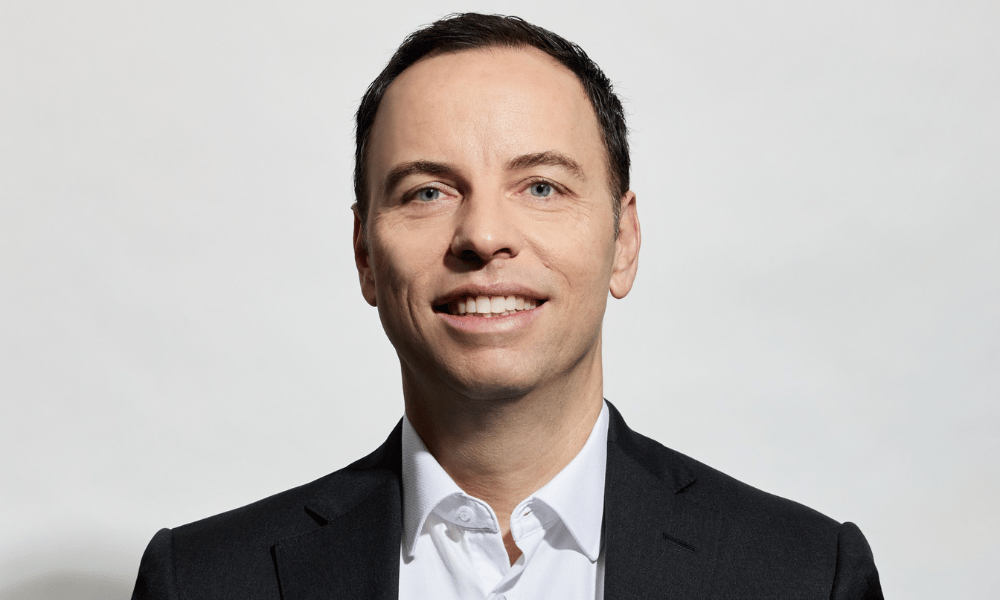
Alto is developing the largest infrastructure project currently under way in Canada – a high-speed rail corridor connecting Quebec City and Toronto that will span more than 1,000 kilometres. For Félix Turgeon, the federal crown corporation's chief legal and real property assets officer in Montreal, that scale demands more than technically sound legal advice. “We need to create value. We need to provide advice that is succinct and that is business,” he says.
That mandate frames everything Turgeon's team does – from a 1,000-kilometre land acquisition exercise involving thousands of properties to Indigenous consultation obligations, impact assessment requirements, and a landmark deal with a private partner led by CDPQ Infra.
From Gaz Métro to mega-project
Turgeon's path to Alto traces a deliberate arc through natural gas, project finance, and energy regulation. After a legal internship at the International Fund for Agricultural Development (IFAD) in Rome and three years in litigation at Gaz Métro, Quebec's largest natural gas distributor, he moved to SNC-Lavalin – now Atkins Réalis – where he spent four years on public-private partnerships across the Middle East and northern Africa.



In 2009, he returned to Gaz Métro, by then renamed Énergir, to lead on a commercial mandate that would define his trajectory: a joint-venture wind farm with Boralex. At 340 megawatts, it was Canada's largest wind farm at the time. Raising $1 billion in project finance in the wake of the 2008 financial crisis meant assembling a syndicate of international lenders with security across all project assets. The lands were subject to Indigenous land claims. Neighbouring landowners expressed concerns throughout the construction. Turgeon says the project involved “complex financing structure, complex construction structure and complex social license environment.”
Before joining Alto, he spent two years as general manager of the Quebec Energy Board – a deliberate step away from legal practice, he says. That background now informs Alto's deal negotiations with Cadence, the private consortium led by CDPQ Infra.
Goalie and value creator
Turgeon describes the legal function at Alto in two ways. The first, as the goalie, covers the protective work: contract negotiation, compliance with federal obligations, development of whistleblowing policies and codes of ethics, and regular employee training. The second is as a value creator, where the team's focus ultimately lies. Legal is embedded in the impact assessment strategy, Indigenous community engagement, deal-structure negotiations with Cadence, and land acquisition planning. “We are deeply involved in the definition of the strategies,” he says.
The team numbers roughly 15, with expertise spanning rail, environment, Indigenous matters, commercial law, and ethics. Turgeon is unambiguous about expectations: “We need to create value. We need to provide advice that is succinct and that is business.”
Acquiring properties across 1,000 kilometres
The land acquisition file is the most operationally demanding for Turgeon's team to manage. Alto needs a right-of-way approximately 60 metres wide over 1,000 kilometres, affecting thousands of individual properties across Quebec and Ontario. “It's massive,” he says.
The strategy prioritizes willing-buyer, willing-seller negotiations. The plan is to offer fair market value plus transaction costs, with support from appraisers, and to leave sufficient time for friendly deals. Expropriation – under the Federal Expropriation Act, not provincial legislation – is the last resort. “We really hope that we can secure as many land acquisitions as possible through friendly deal processes,” Turgeon says. A comprehensive campaign is set to launch in about a year.
Alto has been designated a transformative project. The High-Speed Rail Network Act, enacted by Parliament in March 2026, gave Alto two new instruments. It allows expropriation proceedings to be triggered before the federal impact assessment is complete – protecting the overall project schedule – and grants the ability to register rights of first refusal and prohibitions on work on properties of interest, addressing speculation risk directly. “These provisions help maintain project timelines, but they do not alter the rights of property owners or the legal processes that continue to apply,” Turgeon says.
Indigenous consultation and the reconciliation mandate
Indigenous consultation and public consultation run as parallel but legally distinct streams. Alto has been building relationships with Indigenous communities for two years, progressing from first contact to alignment-specific discussions that began in the fall of 2025. “We want to use this project as a way to support the reconciliation with the Indigenous communities,” Turgeon says. That commitment extends beyond the duty to consult to include employment, contracts, supply opportunities, and leveraging community expertise – including in archaeological investigation work required throughout the corridor.
Public consultation ran from January to April 2026 across open houses, round tables, and online channels, reaching more than 10,000 people in person and over 320,000 people online. Legal is involved in translating that feedback into the project description submitted to the federal Impact Assessment Agency and ensuring that concerns from both provincial governments are addressed in the impact statement.
What large infrastructure projects demand of lawyers
External counsel includes DLA Piper on deal structure negotiations with Cadence, Torys on impact assessment and Indigenous matters for large linear projects, and Dentons Canada LLP on procurement.
For lawyers on such projects, context matters as much as legal analysis. “You need to understand the political context applicable, the social license context,” he says. “You need to be curious, and you need to understand more than the legal framework applicable to the project.” That means the technical framework, the schedule, the stakeholders, and the commercial dynamics – all of it. “It's difficult, it's not given [for all lawyers], and it's key. But when you have that, you can be amazing and fantastic in that industry.”
His advice is simple. “Be curious, ask all the questions that come to your mind.” Strong analytical ability is essential, he adds, but not sufficient on its own – knowing the people around you and the technical and commercial context matters just as much. “Speak out – because if you don't speak out, if you don't ask questions, provide advice, comment, you cannot bring the value you're expected to bring.”