

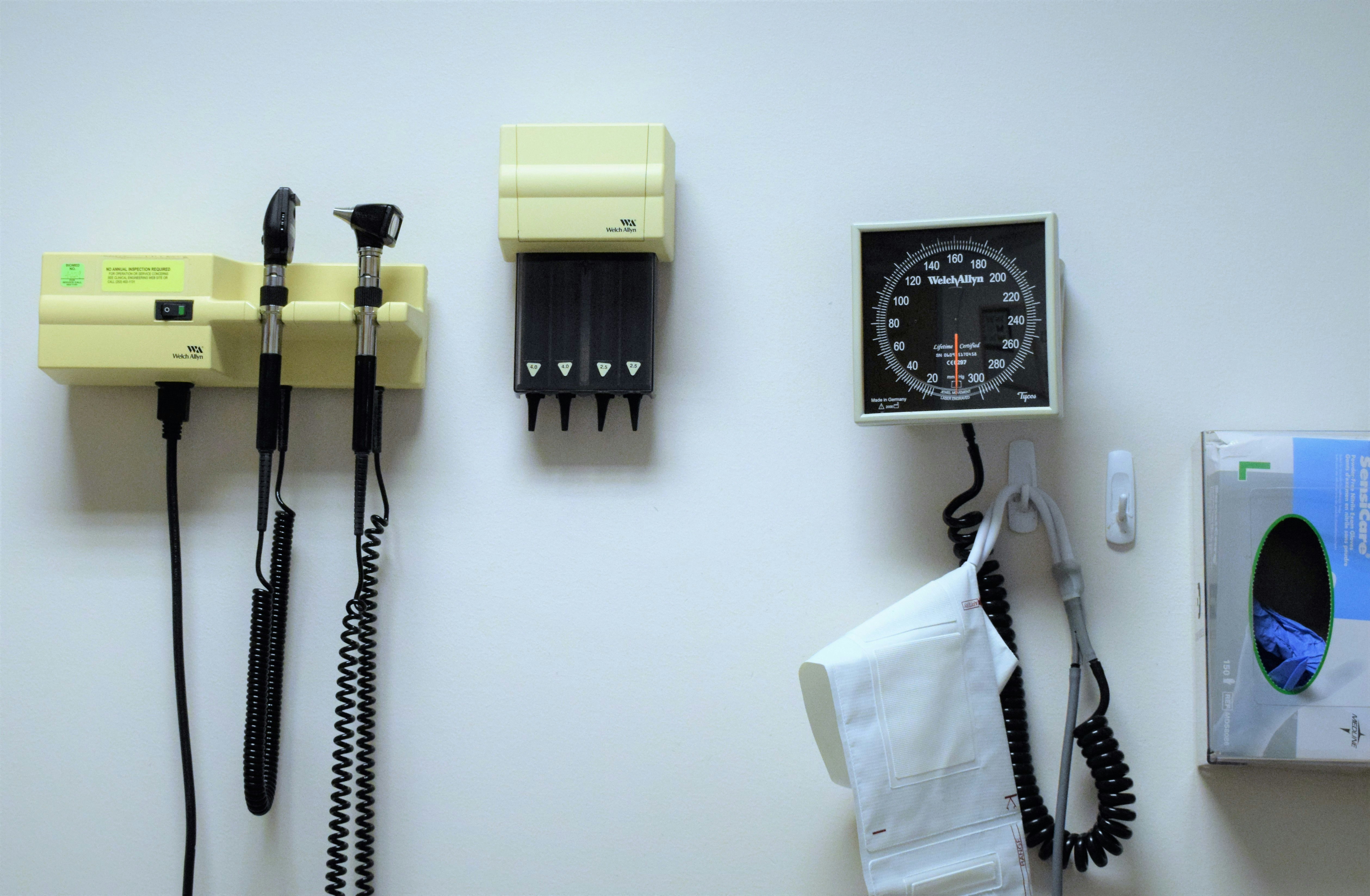
If a medical device is sold in Canada, the law has already had a good look at it. Canada’s Medical Devices Regulations, made under the Food and Drugs Act, govern how devices are classified, licensed, and monitored before and after they reach patients.
The rules cover a wide range of products, from complex imaging equipment to everyday items like eyeglasses and contact lenses. However, not all devices are treated the same under the Regulations, and that difference is intentional.
What are Canada’s Medical Devices Regulations?
Under the Food and Drugs Act, a medical device covers any product used to diagnose, treat, mitigate, or prevent a disease or abnormal physical condition.


This definition is broad; in addition to the surgical tools and hospital machines most people picture, it also applies to contact lenses, catheters, dental floss, and software that detects breast cancer in radiology images.
In other words, if a product helps diagnose, treat, or monitor a health condition, it almost certainly falls under the Medical Devices Regulations.
Health Canada administers these rules through two branches:
- Health Products and Food Branch (HPFB): houses the Medical Devices Directorate and is responsible for device licensing and post-market safety evaluations
- Regulatory Operations and Enforcement Branch (ROEB): manages device recalls, inspections, establishment licensing, and compliance enforcement
The four device classes
Every medical device in Canada falls into one of four risk-based classes. Sixteen classification rules in Schedule 1 of SOR/98-282 determine where a device lands. If a device fits more than one class, the higher-risk classification governs.
More importantly, the class determines how much evidence Health Canada requires before issuing a licence, and how closely a device is monitored after it reaches the market.
Class I
Low-risk items such as bandages, manual wheelchairs, and tongue depressors. No product licence is required, but manufacturers need an establishment licence.
Class II
Moderate-risk devices including contact lenses, acupuncture needles, and short-term catheters. A Medical Device Licence (MDL) is required before sale.
Class III
Higher-risk products such as hip implants, intrauterine devices (IUDs), and glucose monitors. A detailed MDL application with clinical evidence is required.
Class IV
The highest-risk devices, including pacemakers, implantable defibrillators, and breast implants. These face the most demanding review process.
Listen to this podcast to learn more about the new 2026 rules under the Medical Devices Regulations, as will also be discussed below:
Bookmark our Special Edition on Health Sciences Law for more news and updates, including the leading lawyers in this legal area.
How are medical devices approved in Canada?
Two licences govern how medical devices reach the Canadian market, and they work differently.
Medical Device Licence (MDL)
The Medical Device Licence (MDL) is product approval. Issued by Health Canada for a specific device, it is required before any Class II, III, or IV device can be sold or imported in Canada.
Applications must include the following:
- the device’s labelling
- a list of relevant standards the manufacturer has met
- objective evidence that the device satisfies Health Canada’s safety and effectiveness requirements
Medical Device Establishment Licence (MDEL)
The Medical Device Establishment Licence (MDEL) is a company permit. Importers, distributors, and Class I device manufacturers all need one.
Unlike the MDL, the MDEL does not involve a review of any specific product. It authorizes an establishment to handle multiple devices under one licence.
The quality management system requirement
The Medical Devices Regulations require Class II, III, and IV device manufacturers to hold a valid ISO 13485 quality management certificate through the Medical Device Single Audit Program (MDSAP).
Introduced in 2019 to replace the older Canadian Medical Device Conformity Assessment System (CMDCAS), MDSAP allows a single audit to satisfy quality management requirements in five countries: Canada, the United States, Brazil, Australia, and Japan.
How long does the approval process take
Timelines vary based on device class and documentation quality:
- Class II MDL: two to three weeks
- Class III MDL: two to three months
- Class IV MDL: four to five months
- MDEL: four to five months
Device labels must be in at least one official language, and products sold to the general public must carry information in both English and French. Foreign manufacturers are not required to appoint a local Canadian representative before entering the market, removing a barrier that applies in many other countries.
Manufacturers also carry an annual obligation. Before November 1 each year, they must confirm to Health Canada that all information on file for their licensed device remains accurate, or describe any changes.
What are the new rules for medical devices as of 2026?
Canada’s regulatory framework for medical devices has been updated significantly since 2024, with some changes already in force and others still taking effect.
Recall rules tightened
The recall framework amendments (SOR/2024-136) introduced several practical changes:
- manufacturers and importers must notify Health Canada within 24 hours of starting and completing a recall
- lower-risk recalls have been removed from mandatory reporting requirements
- Health Canada may now apply specific terms and conditions to MDELs to address emerging health and safety risks
- inspections of MDEL holders now combine on-site visits with remote and hybrid formats
- shortage and discontinuation notices
Under amendments registered as SOR/2026-96, which are not yet fully in force, manufacturers of devices on Canada’s designated shortage list face new posting requirements. If a shortage is expected more than six months away, notice must go up at least six months in advance. For shorter windows, notice is due within five business days. Manufacturers planning to discontinue a device in Canada must post notice at least 12 months before withdrawal if the decision is made more than a year out, or within five days if the timeline is shorter.
Legal shift on the duty to recall
These regulatory updates arrive alongside a notable court development. In Pedersen v. Advanced Bionics LLC, 2026 ONSC 2239, the Ontario Superior Court of Justice certified a national class action involving defective cochlear implants.
In doing so, the court kept alive a novel legal claim: a standalone duty to recall. The court drew on Vester v. Boston Scientific Ltd., 2015 ONSC 7950, which confirmed that a manufacturer’s duty to warn extends beyond the point of sale, and applied that reasoning to the recall context.
AI devices and a regulatory gap
Health Canada’s Digital Health Review Division, established in April 2018 within the Medical Devices Bureau, was set up to handle rapidly changing digital health technologies. But a gap remains in the rules.
Laura Weinrib, a partner at Blake, Cassels & Graydon LLP, said the question was whether “current pathways for approving medical devices are sufficient” for regulating AI and adaptive devices. Machine learning tools, which change their behaviour based on data they accumulate over time, do not currently fall under the Medical Devices Regulations. Health Canada is developing a new framework for these tools, though it has not yet been finalized.
As an introduction to the discussions below, here’s a video that explains the differences between the regulatory framework for medical devices in the US and Canada:
Head over to our list of the Best Life Sciences and Health Lawyers in Canada as ranked by Lexpert for the top-ranking lawyers and firms in this practice area.
Do FDA regulations apply in Canada?
No, the United States Food and Drug Administration (FDA) has no authority in Canada. Canada operates its own independent medical device regulatory system, administered entirely by Health Canada under the federal Food and Drugs Act and the Medical Devices Regulations.
A related misconception involves the CE mark, the certification used for products sold in the European Economic Area. CE certification reflects compliance with standards set by the European Committee for Electrotechnical Standardization (CENELEC), but it carries no weight in Canada.
A device with only CE certification cannot legally be sold here without first obtaining a Health Canada licence. This matters practically, since FDA approval in the United States does not carry over to Canada.
Cross-recognition and international harmonization
Canada does recognize certain foreign regulatory processes. Under s. 33 of the Medical Devices Regulations, manufacturers governed by a regulatory authority recognized by Health Canada, including those under FDA oversight, may submit a certificate of compliance and a supporting summary report from a recognized certification body in place of a full technical documentation package for their MDL application.
The consequences of getting it wrong
Regulatory compliance in Canada is actively enforced. In January 2022, Health Canada announced that Laser Medical Canada of Laval, Quebec, had pleaded guilty to charges related to:
- selling and advertising unlicensed laser and intense pulsed light (IPL) devices,
- providing false statements to Health Canada inspectors, and
- interfering with seized products
The Quebec Provincial Court sentenced the company to fines totalling $68,593.
Medical Devices Regulations: the right dose of compliance
More than just bureaucratic fine print, Canada’s Medical Devices Regulations are the framework that stands between patients and devices that have not been properly tested or approved. Whether you are a patient, a healthcare provider, or a business looking to enter the Canadian market, the question is the same: has this device gone through the law? If it has not, it has no business being here. That, quite literally, is the prescription.
Subscribe to the free Lexpert newsletter to read more articles on the Medical Devices Regulations and other exclusive content.