

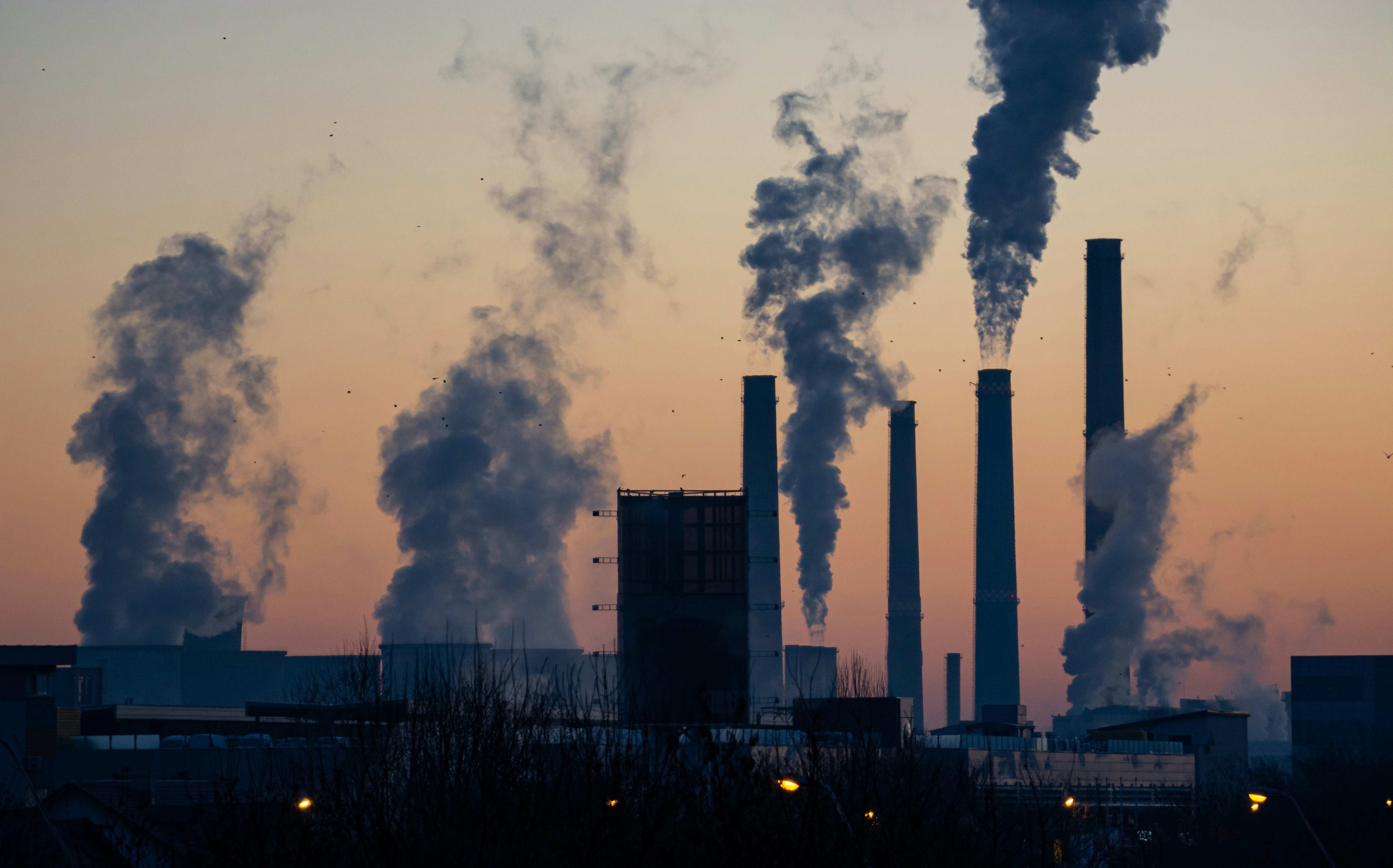
Trading carbon is no longer just for climate advocates and policy scholars; now, it sits in boardroom agendas, loan agreements, and long‑term project plans across Canada. Since each credit bought or sold can help hit a net‑zero promise or trigger a legal headache, companies need to know the laws that surround trading carbon activities.
In this article, we will discuss the basic laws that govern carbon trading. For more information on these laws, or to dig deeper on the other related laws, it's essential to consult with an energy lawyer working in your province or territory.
How does trading carbon work in Canada?
Carbon trading happens when companies or governments trade units that represent a fixed amount of carbon dioxide or other greenhouse gases (GHG). It can either work as a:



- permit or allowance granted to an industry, which allows them to emit GHGs at a certain level; or
- offset or credits, representing a certain amount of GHG emissions, which can be traded or sold
Globally, governments can decide which companies are covered and set mandatory emission limits. Participants can trade permits and use approved offsets to help meet their targets. If they fail to meet these obligations, they may be penalized or required to pay fines or taxes.
To understand trading carbon in Canada, we need to look at the two levels of laws and regulations that govern this market:
- first is by the federal government, through federal statutes and regulations; and
- second is the mix of provincial systems and voluntary carbon markets
The result is a patchwork of markets and laws, instead of a single national market, although trading carbon is currently making waves across Canada.
Learn more about how carbon trading works with this video:
For more information on how Canada's trading carbon markets work, you can reach out to the best energy lawyers for electricity in Canada as ranked by Lexpert.
Compliance markets vs. Voluntary markets
Canada's carbon trading market can be viewed under two scenarios: compliance and voluntary. In both markets, most activity happens through spot or short‑term transactions, where existing carbon credits are bought and sold for immediate delivery or within a short period. Long‑term off‑take agreements have also started to appear, which are usually tied to specific projects.
Compliance markets
Under compliance systems, large emitters must either:
- reduce their own emissions; or
- rely on carbon credits that meet regulatory rules
One compliance credit represents one ton of covered emissions, which are usually measured in carbon dioxide equivalents. Provinces can then meet federal benchmarks in two ways:
- by running a provincial pricing system that sets output‑based limits for facilities; or
- by adopting a cap‑and‑trade system, where allowances are allocated and then traded among regulated emitters
Voluntary markets
On the other hand, the voluntary carbon markets use private finance to support projects that deliver:
- independently verified emission reductions; or
- wider environmental benefits
Developers register projects under private standards bodies that act as certifiers and auditors, such as Verra, Gold Standard, and CSA Group. Each voluntary credit also usually represents one ton of emissions that are reduced or removed.
Buyers in this market range from companies with internal carbon reduction targets, to issuers of green bonds and sustainability‑linked debt that need offsets to meet contract terms.
What are the Canadian laws that govern carbon trading?
Here are some of the laws that govern carbon trading in Canada:
- Canadian Net-Zero Emissions Accountability Act (CNZEAA)
- Environmental Violations Administrative Monetary Penalties Act (EVAMPA)
- Greenhouse Gas Pollution Pricing Act (GGPPA)
We'll discuss these laws below.
Canadian Net-Zero Emissions Accountability Act (CNZEAA)
At the backdrop of the Canadian government's push to nationally reduce GHG emissions and encourage industries to go greener is the CNZEAA. The CNZEAA is a federal statute which holds the government accountable to achieve its net-zero GHG emissions goal by 2050.
By setting up the Canadian government's net-zero emissions targets and plans, the CNZEAA is the law that connects energy laws and environmental strategies. It's important to keep an eye on Canada's green plans, as it will surely affect the future of industries, especially for those that operate with GHGs.
Greenhouse Gas Pollution Pricing Act (GGPPA)
Under the GGPPA, a price is imposed on carbon pollution in provinces and territories that do not have sufficiently stringent pricing of their own. It applies either in full or partially in these provinces and territories, which depends on if that province or territory has its own fuel charge and output-based pricing system (OBPS).
In other words, the provinces and territories can have their own industrial carbon pricing system. Otherwise, the federal industrial carbon pricing system will apply if:
- that province or territory choose not to have their own system; or
- The system of that province or territory doesn't meet the federal standards
The fuel charge rates
The GGPPA works by putting a fuel charge on carbon‑based fuels, which are paid by producers, distributors, and importers. However, the federal government has set all fuel charge rates to zero beginning April 1, 2025, which effectively ceased the application of the federal fuel charges.
The output-based pricing system (OBPS)
The OBPS applies for large industries by giving out financial incentives when industrial facilities reduce their GHG emissions. Under the OBPS, a facility must pay when they exceed the annual facility emissions limit.
On the other hand, the facility will earn surplus credits if its GHG emissions are below this limit. These surplus credits can then be:
- sold or traded to other facilities who are facing compliance obligations; or
- banked by the facility for future use
The GGPPA states that the OBPS only applies in Manitoba, Prince Edward Island, Nunavut, and the Yukon. The rest have their own provincial carbon pricing system, while Quebec uses a provincial cap-and-trade.
This video explains the cap-and-trade system in Canada's trading carbon markets:
Head over to our Special Edition on Energy Law for more resources related to trading carbon markets in Canada and the laws that govern its activities.
The Canadian Greenhouse Gas Offset Credit System Regulations
One regulation that is related to trading carbon is the Canadian Greenhouse Gas Offset Credit System Regulations. Enacted under the GGPPA and the EVAMPA, it establishes a system called the GHG Offset Credit System, which issues credits for voluntary projects that reduce or remove GHGs. Those who want to buy or trade federal offset credits can participate in this System by accessing the Credit and Tracking System (CATS).
Environmental Violations Administrative Monetary Penalties Act (EVAMPA)
The EVAMPA is a federal law which establishes the administrative monetary penalties (AMPs) for violations under the other environmental laws. These laws include the GGPPA, aside from the following:
- Antarctic Environmental Protection Act
- Canada National Marine Conservation Areas Act
- Canada National Parks Act
- Canada Water Act
- Canada Wildlife Act
- Canadian Environmental Protection Act, 1999
- International River Improvements Act
- Migratory Birds Convention Act, 1994
- Wild Animal and Plant Protection
- Regulation of International and Interprovincial Trade Act
These AMPs may be issued even without a court proceeding, as long as it is issued by a regulator. It can be imposed on a violating individual or incorporated entity, including a ship or vessel.
Trading carbon violations under the GGPPA
As for the GGPPA, the EVAMPA imposes AMPs for violations related to carbon trading under the following provisions in the GGPPA:
- s. 174(1): when an individual or organization, who is responsible for a covered facility that emits GHGs in a quantity that exceeds the emissions limit, fails to compensate for the excess emissions by the increased-rate compensation deadline
- s. 178(1)(a): when an individual or organization, who is responsible for a covered facility, fails to compensate when the difference between the quantity of GHG emissions by that covered facility and the emissions limit changes because of a corrected report due to errors or omissions
Fines under EVAMPA's AMPs will be increased when a violator has a history of non-compliance. An individual or organization will have a history of non-compliance if they have committed an EVAMPA-delegated offense within the last five years.
How can lawyers help clients with carbon trading?
All of these may seem complicated, especially for industries trying to harmonize one's operations and Canada's laws on carbon trading. However, it's important that these industries stay compliant, or they will be penalized by the regulators for any and all violations.
To help these industries, energy lawyers are there to provide the following services:
- guide clients through Canada's carbon trading rules: since carbon markets and trading carbon laws are a mix of federal and provincial legal frameworks, energy lawyers can sift through all of them and identify which of these will specifically apply to their clients
- advising on compliance and strategy for large emitters: Canadian environmental laws specifically target industries which are considered as large GHG emitters; as such, energy lawyers can help these industries understand their specific obligations
- help in contract work around carbon credits and pricing: whether carbon trading is through short‑term trades or longer‑term arrangements, energy lawyers can draft and negotiate these agreements, allocate risk, and link pricing terms to regulatory or federal price schedules
The purpose of all these is to comply with the Canadian laws on trading carbon activities and to prevent any penalty.
Trading carbon: Keeping carbon trades on solid legal ground
In the end, carbon trading is not just a climate choice, but also a legal position. Each credit, contract, and registry entry can affect compliance duties, finance arrangements, and your company's reputation across Canada. When markets are fragmented and rules vary by province and territory, clear legal advice becomes part of basic risk management, and not just an optional extra.
Subscribe to the free Lexpert newsletter for more articles on Canadian laws, such as the federal and provincial laws related to trading carbon.