

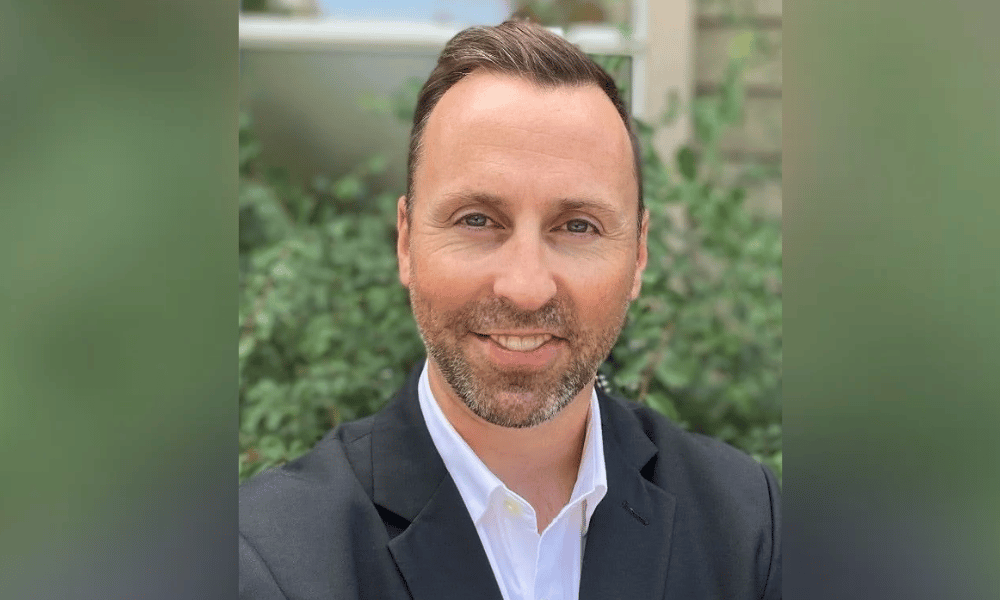
The view that a general counsel in mining plays a mainly defensive or reactive role – contracts, disputes, compliance, and cleaning up risk after decisions have already been made – needs to expand, says Andrew McLaughlin, VP legal affairs and general counsel at Major Drilling Group International Inc. "That's not the extent of the playing field anymore, at least not if it is being done properly," he says.
McLaughlin has been the company's only in-house lawyer since joining in 2015. Major Drilling, headquartered in Moncton, New Brunswick, posted record revenue of $889 million in fiscal 2026 – nearly three times what it generated when he arrived – and now operates across six continents with more than 6,000 employees. That growth has not come with an expanded legal department; it has come with a more deliberate approach to where legal judgment goes.
The art of triage
"When I joined in late 2015, we were under 2,000 employees worldwide and had revenues of around $300 million," McLaughlin says. "We are now well over 6,000 employees, operating across six continents, with revenues approaching $1 billion – still run from Moncton, New Brunswick, where we are one of only a small number of publicly traded companies."


Major Drilling recently closed its acquisition of Bunbury Drilling Company, a specialized mine dewatering contractor in Western Australia. The company also completed its largest acquisition to date in November 2024, Explomin Perforaciones, adding more than 1,000 employees across Peru and other Latin American jurisdictions – all of it landing on a one-lawyer legal department.
Managing that workload comes down to one operating skill. "The real art of the role is triage," McLaughlin says. "Any one workstream can pull you down a rabbit hole if you let it. You need to know when something requires more time and energy, and also be honest about what that means for the rest of your bandwidth." His corporate secretary responsibilities, governance work, sustainability work and legal files are, he says, "all part of the same operating reality.”
"A big part of the job is using judgment and experience to decide how much time a file deserves, when to go deeper, when to bring in outside expertise, and when to recalibrate if a file is taking more time than you expected," he says. "That is probably the most important operating skill in a lean legal function."
AI governance and the human in the loop
McLaughlin is frank about how quickly the AI landscape has shifted. He published a piece in March 2024 in Canadian Lawyer on an AI pilot his team built for contract review – a project that, as he puts it, "has been overtaken several times over." Since then, he says, AI has become "a constant in my day across almost every problem or issue."
The company has since developed an AI governance policy, built around one clear principle: keeping a human in the loop. "The point is not to slow adoption down," he says. "It is to make sure we have visibility on what we are adopting, what data is being exposed, the safeguards we have in place, and who is still accountable for the output." "These tools can help a lot, but they don't get to exercise judgment for us," he says. The policy applies a risk-based framework: productivity use falls into a different category from tools that handle confidential information, employment matters, or customer data. "The higher the risk, the more review and safeguards we need before it gets used," he says.
The relationship with external counsel is shifting alongside it. AI, McLaughlin says, allows him to arrive with sharper, more focused questions, having already worked through what he knows and what he genuinely needs. "That should lead to more targeted questions for external counsel and, frankly, better advice back," he says. What has not changed is who he calls. After a decade at Major Drilling, longstanding external counsel teams remain in place. "In a lean legal function, that continuity is worth a lot," he says.
Knowing where you add value
That structure also shapes how McLaughlin thinks about the boundary between legal oversight and business decision-making – a distinction he is not especially attached to. "Legal analysis is one of the tools I bring to the table, but I'm also part of the executive team and inherently involved in business decisions," he says. "The question is where my involvement adds value, not whether every decision needs a legal checkpoint." To that end, he makes a point of joining operational calls and strategy discussions whenever possible. "If I'm too far removed from the work, the advice becomes narrower and less useful," he says.
The Explomin integration is illustrative. Rather than rebuilding compliance structures, McLaughlin, who just returned from Peru, focused on understanding what already worked and preserving it. "Sometimes the right legal answer is not to create new process," he says.
Permitting credibility and the view from two seats
McLaughlin's perspective extends beyond Major Drilling. As vice-chair of Opportunities New Brunswick (ONB), the province's Crown corporation for economic development, he has observed the investment-attraction challenge from both inside and outside the public sector. His assessment is pointed: "The risk of doing nothing, or of taking so long that the moment passes, does not always get enough weight in the analysis," he says. "Government does not need to do everything, but it does need to move at the pace this moment demands. The window for change won't stay open forever."
New Brunswick's Mineral Resources Act, introduced in May 2026 to replace a Mining Act in place since 1985, moves in the direction McLaughlin has publicly called for. But he notes the legislation has not yet been proclaimed and focuses attention on what follows. "Having the right legislative framework in place is table stakes," he says. "The first few examples of successful projects also really matter. If you want others to come into our waters, you need to show them that the first boats came in safely and are bringing in a good catch."
Looking back on a decade in the role, McLaughlin sees his own experience as part of a broader shift for GCs: a widening of the aperture from an almost exclusive focus on legal risk to a much broader playing field. "The better version of the role goes beyond managing downside risk," McLaughlin says. "It is about bringing strategic foresight to the business: helping the organization see around corners, where legal risk, commercial opportunity, governance expectations and public credibility all come together."
Andrew McLaughlin is a member of the Canadian Lawyer Leaders Network.