

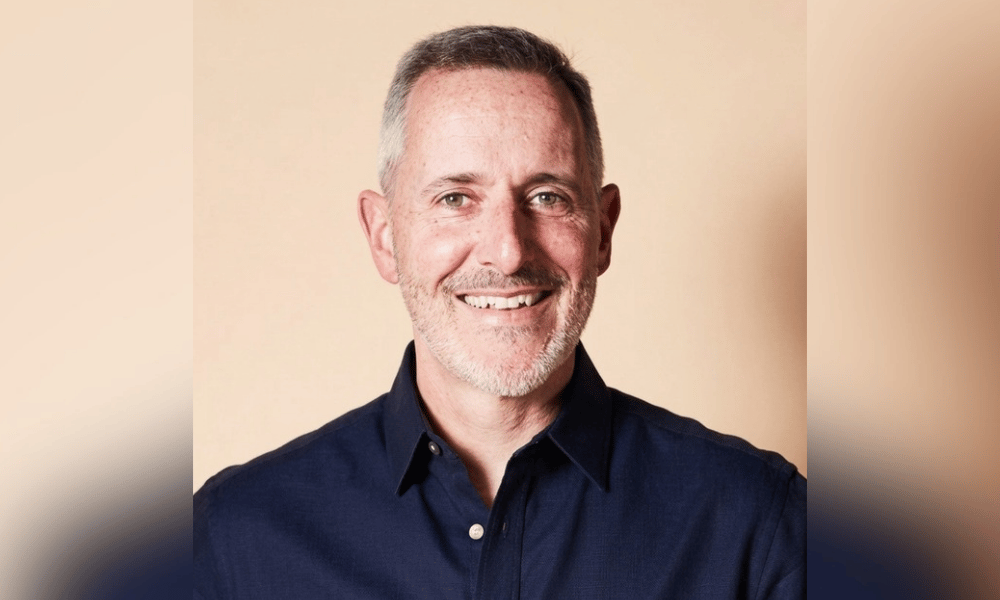
In March 2025, Phil Kurtz was appointed head of government affairs at BlackBerry – a role he describes as arriving at a striking geopolitical moment. The Waterloo-based company has long provided secure communications technology to governments around the world, and Canada’s intensifying push for digital sovereignty has put BlackBerry squarely in demand. Kurtz, who has served as the company’s chief legal officer since July 2022, had a clear read on the shift. “The desire to control your digital future is very strong right now,” he says.
Government affairs and the sovereignty play
About 75 percent of BlackBerry's Secure Communications revenue comes from government clients worldwide, and demand has surged as nations sharpen their focus on digital sovereignty. Rather than lobbying for specific legislative outcomes, Kurtz oriented the function around pipeline development and thought leadership, working with ministers, deputy ministers and Global Affairs Canada to position BlackBerry as a trusted partner for secure government communications.
The centrepiece of that strategy in Canada is BlackBerry's expanded multi-year contract with Shared Services Canada (SSC), announced in March 2026, for broader deployment of its SecuSUITE product. Kurtz describes SecuSUITE as "kind of like a sovereign Teams replacement" – a government-grade, defence-grade voice and messaging platform designed to run entirely on-premises, within a nation's own network. The contract spans tens of thousands of licences, with phased implementation underway.


On the legislative front, BlackBerry supported Bill C-8, which passed in the summer of 2026 and mandates improved security and faster breach reporting for critical infrastructure and telecommunications systems. The company has also worked with an industry association that has provided comments on Bill C-2. This border bill, which is still working through amendments, has raised concerns about vulnerabilities that could emerge from lawful access provisions. "Whatever Canada does on lawful access...shouldn’t require technology companies or communication companies to create backdoors," he says.
Cylance, restructuring and the two-division model
The sale of the Cylance endpoint security business to Arctic Wolf Networks in 2025 – a complex asset carve-out involving hundreds of employees, intricate patent licensing provisions and a transition services agreement built from scratch and managed for more than a year post-close – was a defining transaction for Kurtz as CLO. "It was a deal that could have been really difficult," he says, "but the people around the table brought it together to make it smart and collaborative." He calls it the catalyst for a "complete turnaround" in BlackBerry's performance.
The Cylance sale enabled BlackBerry to separate its two remaining businesses – Secure Communications and QNX, the embedded and automotive software division – into virtually autonomous units. Kurtz's challenge was allocation: which legal functions go divisional, which centralize, and where cost savings are achievable without duplication. Commercial contracting and export controls were fully separated; patent litigation costs were split by division, but the function was retained centrally; public company matters and the corporate secretary role stayed fully central. "[We've] got this team that's worked together a very long time," he says. "So even after the separation, the collaboration is very easy because we all know each other."
The revenue mandate
Running a patent licensing business as a profit-and-loss line – not merely a cost centre – is an unusual remit for a CLO. BlackBerry's portfolio has been rationalized from a peak of more than 35,000 patents to just over 6,000, a level Kurtz says protects core operations and supports monetization without an unsustainable maintenance burden. "For me, it was an opportunity to perform in a different way and add really tangible value to the company," he says. His team delivered a strong second quarter for the licensing business, a result he marked at a company all-hands meeting. He is also clear-eyed about the portfolio beyond patents. "Copyright is a bigger issue oftentimes than patents," he says, with AI implications for code ownership now on his team's agenda.
What gets you to the top
For lawyers with CLO ambitions, Kurtz's advice is direct. "First and foremost, what I get paid for is judgment," he says, and he expects to see it from the lawyers on his team. "The more that you can show your thinking, the faster you're going to earn respect and trust." Beyond that, he points to two moves: volunteer for emerging areas like AI, where seniority is no barrier to becoming the internal authority, and raise your hand when organizational change creates new roles. "Every time we went through one," he says of BlackBerry's many transitions, "I would always step forward and put up my hand."
When he stepped into the CLO seat in 2022, the transition was as much interpersonal as functional. "Suddenly, I had a bunch of peers that were becoming my reports," he says. "And so that relationship was really a top concern of mine." The relationships he had built with the board and the chief executive over the years as deputy general counsel smoothed things over. "Functionally, it was a lot of growth and change, but interpersonally it wasn't, and that made it easier," he says.
His final point is about visibility. "Your leaders may just make assumptions about you in the void that may not reflect what you really think or where you want to be," he says. Seek out face time, including with the leader above your own manager.
Kurtz is the only surviving member of the executive team from BlackBerry's pre-2024 leadership era. After a significant restructuring, a financial turnaround and a leadership overhaul, he says the experience has been the pinnacle of his career – not just for the title, but for the headspace it delivered. "I sleep very well at night," he says.
Phil Kurtz is a member of the Canadian Lawyer Leaders Network.