

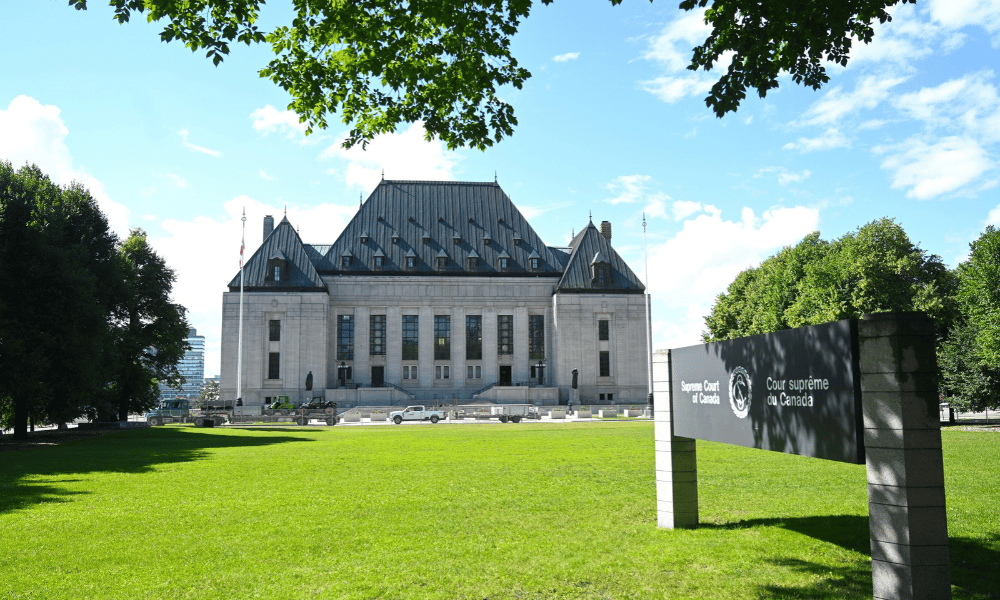
Each year, Lexpert presents the 10 most significant judicial rulings affecting the business community. The top 10 are determined through a nomination process, consultation with Canada’s leading litigators, and independent research by the Lexpert editorial team. The cases must have been released between October 1, 2025, and September 30, 2026. Culminating in decisions by Canada’s appellate courts, this year’s top 10 cases set precedents or clarified nuances on issues like timely securities disclosure, evidence preservation and spoliation, the enforceability of termination and arbitration clauses, patentability of medical treatment methods, and consumer data privacy. In no particular order, here are the cases that have made the most significant impact in 2026 so far.
Lundin Mining Corp. v. Markowich, 2025 SCC 39
The Supreme Court of Canada has upheld leave for an investor to pursue a statutory cause of action against Lundin Mining Corporation and several of its officers and directors for alleged failure to make timely disclosure of material changes under Ontario’s Securities Act. Brandon Kain, partner at McCarthy Tétrault LLP, says the ruling stands as “a landmark Supreme Court of Canada decision” on issues “of critical importance to capital markets.”
In October 2017, Lundin detected pit wall instability at its Candelaria copper mine in Chile – a site that accounted for between 55 and 60 percent of the company’s total sales revenue. Within days, a localized rockslide sent roughly 600,000 to 700,000 tonnes of waste material down a slope, restricting access to a key mining phase. Lundin shut down at least part of the mine and revised its 2018 copper production forecast downward by 20 percent. Rather than disclosing these developments immediately, Lundin included them in a routine operational update about a month later, on November 29, 2017. The next day, its share price dropped 16 percent – a loss of more than $1 billion in market capitalization.


Dov Markowich, who purchased Lundin shares after the instability and rockslide occurred but before the company disclosed them, commenced a proposed class proceeding alleging that the company breached its timely disclosure obligations. The motion judge refused leave, concluding that neither event constituted a “material change” in the company’s business, operations, or capital because Lundin continued to operate as a mining company. The Court of Appeal disagreed and granted leave. The SCC, in an 8-1 decision written by Justice Jamal, dismissed Lundin’s appeal, holding that the motion judge relied on overly restrictive definitions of “change,” “business,” “operations,” and “capital” – terms the Ontario legislature intentionally left undefined to allow flexible, contextual application across industries and corporate structures.
The decision affirms that the terms in the “material change” definition must be interpreted contextually, and that operational disruptions with demonstrable market impact may trigger the obligation to disclose “forthwith” rather than as part of periodic updates. As Luis Sarabia of Davies Ward Phillips & Vineberg LLP observed, the SCC held that a “material change” requiring immediate disclosure “should be read broadly and in context, not limited to ‘core’ or ‘fundamental’ changes.” Monique Jilesen of Lenczner Slaght LLP, counsel to the intervener CFA Societies Canada Inc., says the decision “clarifies that the materiality threshold is not to be applied narrowly to limit disclosure, but rather serves to deter informational asymmetry between issuers and investors across Canadian capital markets.”
CLIENTS > FIRMS > LAWYERS
Lundin Mining Corp., Paul K. Conibear, Marie Inkster, Paul McRae, Lukas H. Lundin, and Stephen Gatley > Cassels Brock & Blackwell LLP > Lara Jackson, John M. Picone, Kate Byers, and Laura Cloutier
Dov Markowich > Groia & Company Professional Corp., Strosberg Wingfield Sasso LLP > Joseph Groia, Jay Strosberg, Scott Robinson, and Yona Gal
Canadian Coalition for Good Governance > Torys LLP > John A. Fabello, Gillian B. Dingle, and Lauren Nickerson
Ontario Securities Commission > Ontario Securities Commission > Aaron Dantowitz and Charlie Pettypiece
Mining Association of Canada > Davies Ward Phillips & Vineberg LLP > Luis Sarabia, Jonathan Bilyk, and Matthew Howe
CFA Societies Canada Inc. > Lenczner Slaght LLP > Monique Jilesen, Brian Kolenda, and Devon R. Kapoor
LiUNA Pension Fund of Central and Eastern Canada > Koskie Minsky LLP > Vlad Calina and Caitlin Leach
Insurance Bureau of Canada > McCarthy Tétrault LLP > Dana M. Peebles and Valérie Lord
Canadian Chamber of Commerce > McCarthy Tétrault LLP > Wendy Berman, Brandon Kain, and Aya Schechner
SS&C Technologies Canada Corp. v. Bank of New York Mellon Corp., 2026 SCC 29
When a Canadian data provider discovered its bank counterparty had been funnelling licensed pricing data to affiliates for free, it explicitly requested that the bank preserve evidence of how the data had been redistributed. The bank refused. The ensuing litigation reached the Supreme Court of Canada, which unanimously established a test for spoliation and held that once spoliation is proved, a mandatory rebuttable presumption arises that the destroyed evidence was unfavourable to the spoliator’s case. Courts have no discretion to decline to draw that inference. As Chris Paliare of Paliare Roland Rosenberg Rothstein LLP notes, the case “marks the Supreme Court of Canada’s first pronouncement on spoliation – the intentional destruction or concealment of evidence to subvert the truth-finding process – since 1896.”
In 1999, SS&C Technologies entered into a data services agreement with the Bank of New York Mellon that prohibited the bank from sharing, redistributing, or selling the data to subsidiaries or affiliates. A joint venture between the bank and a Canadian financial institution held a separate agreement with SS&C, which the joint venture terminated in 2011, claiming it no longer needed the services. In 2016, SS&C discovered that the joint venture had continued to receive data from the bank for free after termination, thereby circumventing the licensing scheme. SS&C terminated the agreement and sued for breach of contract.
The trial judge found the bank breached its agreement and awarded US$5,696,850 in damages using a “rateable approach,” drawing two adverse inferences against the bank for its failure to produce and preserve documents – but stopped short of making an express finding of spoliation. The Court of Appeal made that finding but upheld the damage award.
Writing for the court, Justices Côté and Moreau held that the bank committed spoliation and that the trial judge’s inferences were too weak to remedy the misconduct. The court set out a four-part test: the evidence was intentionally destroyed or concealed, litigation was ongoing or reasonably contemplated, the evidence was relevant, and a reasonable inference arises that the destruction was meant to affect the litigation. Paliare said the bank’s “intentional destruction of critically important documents, which it failed to preserve in the face of a document preservation notice,” precluded the plaintiffs from establishing damages for breaches of contract extending over 17 years; he added that “the Supreme Court’s unanimous decision sends a strong message to litigants that such cheating, which undermines the integrity of the administration of justice, will not be tolerated and will result in mandatory and significant adverse inferences against the spoliator.” Eli Mogil, partner at McCarthy Tétrault LLP, describes the decision as “a highly significant case,” adding that “the decision will affect the conduct of all litigation, especially complex matters between sophisticated parties with documentary records going back many years, and Canadian businesses must review their document preservation and data retention policies in light of it.” The court allowed the appeal and remitted the matter for reassessment of damages.
CLIENTS > FIRMS > LAWYERS
SS&C Technologies Canada Corp. > Paliare Roland Rosenberg Rothstein LLP > Chris G. Paliare, Ren Bucholz, Glynnis Hawe, Catherine Dunne, and Ellie McPhee-Mullins
Bank of New York Mellon Corp. > McCarthy Tétrault LLP, Lenczner Slaght LLP > Eli Mogil, Brandon Kain, Erin Chesney, Aya Schechner, Thomas Curry, and Brian Kolenda
Baker v. Van Dolder’s Home Team Inc., 2026 ONCA 568
The Ontario Court of Appeal has set out a framework for interpreting termination clauses in employment contracts, resolving conflicting lower court decisions on what makes such clauses enforceable under the Employment Standards Act, 2000 (ESA). Tim Lawson, partner at McCarthy Tétrault LLP, says the ruling “harmonizes how Ontario courts assess the enforceability of termination clauses with the general principles of contractual interpretation,” noting that it is “highly significant for employers and employees alike across the province, impacting almost any employment contract.”
Frederick Baker worked for Van Dolder’s Home Team Inc. as its controller and head of finance. His employment contract permitted the company to terminate his employment “at any time, without just cause” upon providing only the minimum notice or payment in lieu of notice required by the ESA. When Van Dolder’s terminated Baker without cause in March 2023, he challenged the clause’s enforceability, arguing that the phrase “at any time” was inconsistent with the ESA because the statute prohibits termination at certain times, such as upon the conclusion of an employee’s leave or as a reprisal.
The motion judge agreed with Baker and found the termination clause unenforceable. In the companion case, Li v. Wayfair Canada ULC, virtually identical language – permitting termination “at any time and for any reason” – was upheld as valid. The divergent outcomes illustrated a persistent split in the lower courts.
The court acknowledged that employment contracts must be interpreted differently from other commercial agreements, noting “the desirability of protecting the interests of vulnerable employees” and the “pronounced power imbalance between employers and employees.” However, the court held that interpretation remains a contractual exercise aimed at discerning the parties’ objective intentions from the contract as a whole and its surrounding circumstances. The court found that the termination provisions in both contracts reflected “an objective intention to comply with the minimum standards in the ESA applicable upon the termination of employment.”
The court allowed Van Dolder’s appeal and dismissed Li’s appeal, upholding the termination clauses in both contracts. The decision aims to resolve the divergent outcomes that had marked the lower court jurisprudence on ESA-compliant termination provisions. Lawson adds that the decision “received extensive coverage in the legal media and months of commentary online,” and that the plaintiffs plan to seek leave to appeal to the Supreme Court of Canada.
CLIENTS > FIRMS > LAWYERS
Van Dolder’s Home Team Inc. > McCarthy Tétrault LLP > Tim Lawson, Brandon Kain, Marco Fimiani, and John Gray
Frederick Baker > Achkar Law > Filip Pejovic and Jason Jagpal
Parkdale Community Legal Services and Income Security Advocacy Centre > Cavalluzzo LLP > Jackie Esmonde, Cole Eisen, and David McQuillan
Song Li > Whitten & Lublin PC > Simone Ostrowski and Benjamin Hahn
Wayfair Canada ULC > Hicks Morley Hamilton Stewart Storie LLP > Edward J. O’Dwyer and Kelly Brennan
Ontario Chamber of Commerce > Hicks Morley Hamilton Stewart Storie LLP > Andrew J. McCreary, Mari T. Maimets, and Stephanie Gellatly
Martin v. Alphabet Inc., Google LLC, Google Canada Corporation, Apple Inc., and Apple Canada Inc.
The Competition Tribunal has issued the first decision interpreting the “public interest” leave test under s. 103.1(7) of the Competition Act, a provision introduced by recent amendments that allows private individuals to seek leave to bring competition law claims even when they are not directly and substantially affected in their own business.
Alexander Martin applied for leave to commence proceedings against Google and Apple, alleging that Google controls over 90 percent of the Canadian general search engine market and maintains that dominance through exclusionary practices. Martin pointed to the Information Services Agreement (ISA) between the two companies, entered in 2016, under which Google paid Apple US$20 billion in 2022 alone to make Google the exclusive default search engine on Apple devices, foreclosing competitors from distribution on the more than 225 million iPhones sold globally by Apple in 2024. He sought orders under the abuse of dominance provisions (s. 79) and the anti-competitive agreements provisions (s. 90.1) of the Act.
The Competition Tribunal dismissed the application. Adopting a three-step approach drawn from the SCC’s public-interest standing jurisprudence, the tribunal assessed whether the proposed application is a substantial and genuine competition law dispute, whether the applicant has a genuine interest, and whether the proposed proceeding is a reasonable and effective means of determining the competition issues raised. The tribunal found that while the issues transcended Martin’s private interests, his evidence fell short on the second and third steps – he did not adequately demonstrate a genuine interest beyond being a search engine user, and he provided no evidence of the resources, expertise, or evidentiary plan needed to advance the proposed proceeding.
The decision is the first to define the boundaries of private access to competition law remedies under the reformed Competition Act. Derek Ricci of Davies Ward Phillips & Vineberg LLP says that, as the very first case decided under the newly enacted private right of action regime in the Competition Act, the decision “set the test that will be applied in future public-interest applications.” The Competition Tribunal’s application of that test makes clear that applicants must present more than bare allegations and demonstrate the capacity and evidentiary foundation to advance a proposed proceeding.
CLIENTS > FIRMS > LAWYERS
Alexander Martin > Berger Montague > Albert Pelletier, Ian Literovich, and Edwina Mayama
Alphabet Inc., Google LLC, and Google Canada Corporation > Davies Ward Phillips & Vineberg LLP > Kent E. Thomson, Elisa K. Kearney, Derek Ricci, Steven Frankel, Chenyang Li, and Anisha Visvanatha
Apple Inc. and Apple Canada Inc. > McMillan LLP > Neil Campbell, Éric Vallières, and William Wu
Commissioner of Competition > Justice Canada > Paul Klippenstein and Kevin Hong
Pharmascience Inc. v. Janssen Inc., 2026 SCC 26
Can a pharmaceutical company patent a dosing regimen for a drug? The Supreme Court of Canada has confirmed that methods of medical treatment are not patentable subject matter under the Patent Act but has held that dosing regimen patents that do not require a physician’s professional skill and judgment to implement remain valid. Fiona Legere of Blake, Cassels & Graydon LLP regards the decision as “the leading authority on the patentability of methods of medical treatment in Canada” – the court’s “first ruling on substantive patent law in nearly a decade,” she says, noting that it “brings much-needed clarity to the scope of patent protection for treatment-related innovations such as dosing regimens.”
The case centres on Janssen Inc.’s patent for dosing regimens for a long-acting injectable formulation of paliperidone palmitate, a drug used to treat schizophrenia. The patent specifies fixed doses – 150 and 100 mg-eq. for the first and second doses, then 75 mg-eq. monthly – administered in designated muscle sites at set intervals, with a separate regimen for patients with impaired kidney function. Pharmascience Inc., seeking approval to market a generic version, challenged the patent as invalid on the basis that it impermissibly claims a method of medical treatment.
Writing for a 7-2 majority, Justice Jamal grounded the exclusion in the broader principle that “professional skills – which are unrelated to trade, industry, or commerce” – fall outside the definition of “invention” in s. 2 of the Patent Act. Physicians already benefit from “a state-granted monopoly to practise and share their skills for the public benefit” and do not require patent protection as an additional incentive, the SCC held. However, the majority also held that Janssen’s dosing regimen patent does not impermissibly claim a method of medical treatment, because implementing the fixed dosing schedules does not require a physician’s professional skill and judgment after a treatment decision has been made.
Justices O’Bonsawin and Moreau concurred in the result but disagreed with maintaining a blanket prohibition, arguing that the legal foundations of the exclusion have significantly eroded and that each claimed invention should be assessed on the same basis as any other. The SCC dismissed the appeal. The decision draws the line between patentable drug innovations and unpatentable medical practice. Andrew Brodkin, partner at Goodmans LLP, notes that “the holding is expected to influence how brand pharmaceutical companies draft patents in a way that complies with the strictures of the decision, and provide a basis to challenge the patentability of inventions that appear to tread on the professional judgment of medical practitioners.” Marian Wolanski of Belmore Neidrauer LLP adds that “the decision will have direct consequences for pharmaceutical innovators, generic and biosimilar manufacturers, and the investors who fund them.” Julie Desrosiers of Fasken Martineau DuMoulin LLP describes it as “the defining authority,” adding that the decision “is expected to shape patent drafting and filing strategy, product life cycle management and pharmaceutical patent litigation across Canada’s life sciences sector for years to come.”
CLIENTS > FIRMS > LAWYERS
Pharmascience Inc. > Goodmans LLP > Andrew Brodkin, Daniel Cappe, and Sandon Shogilev
Janssen Inc. and Janssen Pharmaceutica N.V. > Blake, Cassels & Graydon LLP; Fasken Martineau DuMoulin LLP; Belmore Neidrauer LLP > Catherine Beagan Flood, Fiona Legere, Spencer Livingstone, Julie Desrosiers, Marian Wolanski, and Eliane Elbogen
Canadian Generic Pharmaceutical Association > Osler, Hoskin & Harcourt LLP > J. Bradley White, Nathaniel Lipkus, and Daniel Hnatchuk
International Federation of Intellectual Property Attorneys > Cassels Brock & Blackwell LLP > Andrew Skodyn, Sean Jackson, and Eleanor Wilson
Innovative Medicines Canada and BIOTECanada > Norton Rose Fulbright Canada LLP > Orestes Pasparakis and Kristin Wall
Canadian Organization for Rare Disorders > Tyr LLP > Melanie Baird, Amy Grenon, Cole Meagher, and Nick Morrow
David Homuth, Marco Solmi, and Pierre Bleau > Gowling WLG (Canada) LLP > Christopher C. Van Barr, Erin Creber, Will Boyer, and Mackenzie Jamieson
Angus A2A GP Inc v. Alvarez & Marsal Canada Inc., 2026 ABCA 156
The Alberta Court of Appeal has confirmed that equity investors – not only creditors or debtor companies – may initiate proceedings under the Companies’ Creditors Arrangement Act (CCAA), and that the statute’s reach extends to foreign entities with no assets in Canada where they are “inextricably intertwined” with Canadian entities. Robyn Gurofsky, partner at Fasken Martineau DuMoulin LLP, views the ruling as “a significant appellate insolvency decision” that expanded “the range of parties that may commence proceedings under the CCAA.”
The case arose from two residential real estate development projects in Texas: Fossil Creek – a 93-acre project in Fort Worth financed with approximately $21 million from investors, and Hills of Windridge – a 415-acre project in the Dallas/Fort Worth area backed by approximately $44 million. Canadian and offshore investors financed both projects through a multilayered corporate structure involving Canadian trusts, Alberta and Ontario limited partnerships, and Texas limited liability companies. When investors grew concerned about project management and asset dissipation, five Canadian investors obtained an initial order under the CCAA on an effectively without-notice basis, appointing Alvarez & Marsal Canada Inc. as the court monitor.
The appellants – which included both Canadian entities and two Texas LLCs – challenged the initial order on several grounds: that equity investors lack standing to commence CCAA proceedings, that the court had no jurisdiction over companies incorporated outside Canada with no Canadian business or assets, that entities not individually insolvent cannot be subject to the CCAA, and that procedural flaws tainted the proceedings.
The Alberta Court of Appeal dismissed all four appeals. It held that the CCAA’s broad remedial purpose supports standing for equity investors where investment structures involve Canadian entities and Canadian investors whose funds are at risk. The court found that the Texas LLCs were “inextricably intertwined” with the Canadian entities, justifying their inclusion. The court also accepted that the anticipated outcome – liquidation and distribution rather than traditional restructuring – fell within the CCAA’s scope given the circumstances.
CLIENTS > FIRMS > LAWYERS
Angus A2A GP Inc., Angus Manor Park A2A GP Inc., Angus Manor Park A2A Capital Corp., Angus Manor Park A2A Developments Inc., Hills of Windridge A2A GP Inc., Fossil Creek A2A GP Inc., A2A Developments Inc., Serene Country Homes (Canada) Inc., A2A Capital Services Canada Inc., Fossil Creek A2A Limited Partnership, Hills of Windridge A2A LP, Fossil Creek A2A Trust and Hills of Windridge A2A Trust > Miles Davison LLP > Daniel Jukes
Alvarez & Marsal Canada Inc. > Cassels Brock & Blackwell LLP > Jeffrey L. Oliver, Danica Jorgenson, and Danielle Marechal
Fossil Creek A2A Developments, LLC and Windridge A2A Developments, LLC > Bennett Jones LLP > Kelsey J. Meyer, KC, Luc Russell Rollingson, and Chyna Katherine Brown
Michael Edwards, Paul Lauzon, Isabelle Brousseau, Pat Wedlund, Brian Richards, and Canadian Investors > Fasken Martineau DuMoulin LLP > Robyn Gurofsky and Kaitlyn Marie Giroux Wong
Offshore Investors > Norton Rose Fulbright Canada LLP > Aaron Stephenson, Daniel Layne Wood Stethem, and Howard A. Gorman, KC
Pillar Capital Corp. > Torys LLP > Kyle Kashuba
1086289 Ontario Inc. (Urban Electrical Contractors) v. Welland (City), 2026 ONCA 352
This decision groups four appeals under a single citation, each raising common issues about the disclosure of partial settlement agreements in multi-party civil litigation. Among them is Evertz Technologies Limited v. Providius Corp. (COA-24-CV-1252), in which the court upheld a stay of a $600 million claim after the plaintiff failed to disclose a partial settlement agreement. Anu Koshal, partner at McCarthy Tétrault LLP and counsel for the Providius respondents, calls it “one of the largest cases to be dismissed under the doctrine of abuse of process in Canada.”
A five-judge panel of the Ontario Court of Appeal overruled its own 2018 decision in Handley Estate v. DTE Industries Limited. Under the Handley Estate rule, parties who entered a partial settlement that changed the adversarial landscape of the litigation were required to disclose the agreement immediately to non-settling parties and the court. Failure to do so automatically constituted an abuse of process – regardless of whether any actual prejudice resulted – and the sole remedy was a stay of proceedings. The rule applied automatically and without exception.
The court concluded that Handley Estate was wrongly decided. It held that the rule departed from the principles governing the doctrine of abuse of process, which has long required a contextual and discretionary assessment directed to whether the impugned conduct results in “unfairness, prejudice, oppression, or otherwise undermines the integrity of the administration of justice.” Any remedy, the court held, must be “proportionate to the nature and consequences of the abuse.” The court also addressed the interaction between the common law and the recently enacted Rule 49.14 of the Rules of Civil Procedure, which now imposes specific disclosure obligations for settlement agreements.
The decision replaces the automatic sanction under Handley Estate with a contextual framework that requires courts to assess whether non-disclosure caused actual unfairness or prejudice before imposing a remedy, and to tailor that remedy proportionately to the circumstances.
CLIENTS > FIRMS > LAWYERS
Rounthwaite Dick & Hadley Architects Inc. (COA-24-CV-0855) > Lundy Levy & Eski Barristers > Andrew Lundy and Zohar Levy
The Corporation of the City of Kawartha Lakes (COA-24-CV-0938) > Borden Ladner Gervais LLP > Kevin A. McGivney and Natalie D. Kolos
Thrive Capital Management Ltd., Thrive Uplands Ltd., 2699010 Ontario Inc., and 2699011 Ontario Inc. (COA-24-CV-1159) > Lerners LLP; Scher Law Professional Corporation > Earl A. Cherniak, K.C., William Pepall, Rebecca Shoom, and Hugh Scher
Evertz Technologies Ltd. and Evertz Microsystems Limited (COA-24-CV-1252) > Orr Taylor LLP > James C. Orr and Jonathan H.W. Careen
The Corporation of the City of Welland (COA-24-CV-0855); Cody Howran and Christine Fournier (COA-24-CV-0938) > Dewart Gleason LLP > Sean Dewart and Brett Hughes
Cydahlia Howran, by her Litigation Guardian, Jennifer Freeman, and Jennifer Freeman personally (COA-24-CV-0938) > Lundy Levy & Eski Barristers > Evan Rankin
Noble 1324 Queen Inc., Michael Hyman, Giuseppe Anastasio, Noble Developments Corporation, Hampshire and Associates Incorporated, Noble 12826 Leslie Corp., Wilshire Holdings Inc., Noble 376 Derry Corp., Nobel 390 Derry Corp., 2704536 Ontario Inc., 2724136 Ontario Inc., Hampshire Holdings Inc., Azan Homes Inc., Lisa Susan Anastasio, Guiseppe Anastasio Jr., Sandra Azan-Hyman, Justin Hyman, Alan Hyman and Morris Hyman (COA-24-CV-1159) > Tyr LLP > Jason Wadden, Michael O’Brien, and Aditi Gupta
Providius Corp., Tony Zare (a/k/a Antony Zarezadeqan), Ayman Al Khatib, and Jackson Wiegman (COA-24-CV-1252) > McCarthy Tétrault LLP > Anu Koshal, Rachel Chan, and Almut MacDonald
Emond v. Trillium Mutual Insurance Co., 2026 SCC 3
After a flood destroyed their home, Stephen and Claudette Emond turned to their insurer for the cost of rebuilding – including the additional expense of complying with a local conservation authority’s requirements. Their insurer, Trillium Mutual Insurance Company, acknowledged coverage for the loss but disputed whether those compliance costs fell within the policy’s guaranteed rebuilding cost (GRC) endorsement, which promises to pay for rebuilding using current building techniques even when the cost exceeds the policy’s stated insurance amount. The Supreme Court of Canada, in a 7-1-1 decision, sided with the insurer.
The application judge had ruled in favour of the Emonds, declaring that the GRC endorsement entitled them to full rebuilding costs without limitation. The Court of Appeal reversed, finding that the compliance cost exclusion – which excludes “increased costs of repair or replacement due to operation of any law regulating the zoning, demolition, repair, or construction of buildings and their related services” – applied to limit the insurer’s liability.
Writing for the majority, Justice Rowe held that when the insurance contract is read as a whole, the compliance cost exclusion unambiguously applies despite the GRC endorsement. Endorsements, the court emphasized, “are not self-contained and standalone contracts disconnected from the insurance policy of which they form a part.” The majority also held that the nullification of the coverage doctrine – which prevents an exclusion from completely defeating the purpose of the purchased coverage – did not apply because the GRC endorsement still provided meaningful value beyond the compliance costs at issue.
The decision establishes that endorsements to a standard form insurance policy do not displace the policy’s exclusion clauses unless clear language indicates otherwise. Joseph Obagi of Connolly Obagi LLP, one of the lawyers who represented the Emonds, told Canadian Lawyer that “the majority missed an opportunity to hold insurance companies to a higher standard,” adding that homeowners need to carefully review their policies because declaration-page language like “guaranteed replacement cost coverage” may not deliver what it appears to promise.
CLIENTS > FIRMS > LAWYERS
Stephen and Claudette Emond > Connolly Obagi LLP > Joseph Y. Obagi, Elizabeth A. Quigley, and Wayne J. Fryer
Trillium Mutual Insurance Co. > Gowling WLG (Canada) LLP > Pasquale C. Peloso, Jaime Wilson, James Plotkin, and Darren Johnston
Insurance Bureau of Canada > Blake, Cassels & Graydon LLP > Jeff Galway, Christopher DiMatteo, and Lilian Esene
Ontario Trial Lawyers Association > Oatley Vigmond LLP > Brian Cameron and Liane Brown
Canadian Association of Mutual Insurance Companies, Ontario Mutual Insurance Association, and Farm Mutual Reinsurance Plan Inc. > McCarthy Tétrault LLP > Atrisha Lewis, Akiva Stern, Mathew Zaia, and William G. Scott
Hvitved v. Home Depot of Canada Inc., 2026 BCCA 39
The British Columbia Court of Appeal has upheld the certification of a privacy class action against Home Depot of Canada Inc., arising from the retailer’s transfer of customer email addresses and purchasing information to Meta Platforms Inc. (the operator of Facebook), which Home Depot used, among other things, to assess whether its Facebook advertising campaigns were generating in-store sales.
From October 2018 to October 2022, Home Depot used Meta’s offline conversion tool. When customers provided their email addresses to receive an electronic receipt, Home Depot transferred a hashed version of those addresses – along with other purchase information – to Meta. If the hashed email matched an address Meta already held, Meta could link the purchase data to a specific Facebook account. Home Depot may have shared as many as 6.85 million unique hashed email addresses with Meta during this period.
Lasse Hvitved, a British Columbia customer, brought a class action alleging breach of privacy legislation in British Columbia, Saskatchewan, Manitoba, and Newfoundland and Labrador. The chambers judge certified the privacy claim but struck the breach-of-contract, intrusion upon seclusion, and unjust enrichment claims. Both sides appealed.
The court dismissed both the appeal and the cross-appeal. On the breach-of-contract claim, the court agreed with the chambers judge that the pleading was bound to fail, as it relied on generic assertions and contained no material facts about how the alleged contracts were formed or the basis for the claimed express or implied terms. Alexandra Cocks, partner at McCarthy Tétrault LLP and counsel for Home Depot on the appeal, says the decision “illustrates how courts can strike a large part of a claim at the certification stage and offers important guidance on what is required to properly plead a breach of contract claim.”
On the privacy claim, the court rejected Home Depot’s argument that the contextual nature of the privacy inquiry precluded a finding of commonality among class members. It also declined to narrow the class, finding Home Depot’s objections to including non-Facebook users and corporate customers without merit at this stage, and left open for trial whether a corporation can advance a claim under provincial privacy legislation that does not expressly exclude it.
Cocks describes the ruling as “a key BC Court of Appeal decision in privacy class actions, a growing area of litigation.”
CLIENTS > FIRMS > LAWYERS
Lasse Hvitved > CFM Lawyers LLP > Jamie Thornback and Oliver Pulleyblank
Home Depot of Canada Inc. > McCarthy Tétrault LLP > Alexandra Cocks and Connor Bildfell
Lin v. Uber Canada Inc., 2025 FCA 183
A proposed class action alleging that Uber engages in “drip pricing” – representing a price for its food delivery service that is not attainable due to additional fees charged – has been stayed in favour of arbitration by the Federal Court of Appeal. The practice is alleged to be contrary to s. 52 of the Competition Act.
Arthur Lin commenced a proposed class proceeding in Federal Court against Uber Canada Inc. and related entities, arguing that Uber Eats’ online platform displays a base price and then adds fees at checkout, rendering the advertised price unattainable. When Lin opened his Uber Eats account, he agreed to a contract containing a mandatory arbitration clause that directs disputes to the ADR Institute of Canada (ADRIC).
Lin challenged the enforceability of the arbitration clause on three grounds: that provincial consumer protection legislation, particularly Ontario’s Consumer Protection Act, 2002, overrides the clause; that the clause is “incapable of being performed” because ADRIC does not adjudicate class proceedings; and that the clause is unconscionable.
In a unanimous decision, the court applied the two-part test set out in the Supreme Court’s decision in Peace River Hydro Partners v. Petrowest Corp. and found that Uber had established an arguable case that all four technical prerequisites for a stay had been met. Turning to the second branch, the court held that Lin failed to establish on a balance of probabilities that any statutory exception prevented a stay. The court confirmed that provincial consumer protection legislation does not apply to proceedings under the Competition Act in the Federal Court, and that the arbitration clause was neither incapable of performance nor unconscionable.
The decision clarifies that Federal Court proceedings under the Competition Act are not subject to provincial consumer protection overrides, and that the “legislative and judicial preference for holding parties to arbitration agreements,” as stated in Peace River, applies absent a clear statutory exception.
CLIENTS > FIRMS > LAWYERS
Arthur Lin > Evolink Law Group > Simon Lin
Uber Canada Inc., Uber Technologies, Inc., Uber Portier Canada Inc., and Uber Castor Canada Inc. > McCarthy Tétrault LLP > Gillian Kerr, Patrick Williams, and Tanner Lorenson