


New technologies and policies are shaping the types of class action lawsuits plaintiffs are pursuing and how lawyers are approaching them. Below are some of the key trends leading class action lawyers are seeing in Canada.
Class actions arising from the Competition Act’s prohibition of drip pricing
Between 2022 and 2024, Parliament introduced three rounds of changes to the Competition Act to modernize Canada’s competition regime. Among these changes was the prohibition of drip pricing – the practice of offering consumers products or services at one price, only to incrementally introduce more fees or charges later.
Since then, numerous class action plaintiffs – and the Competition Bureau itself – have filed lawsuits against businesses they allege engage in drip pricing. Patrick Williams, a partner in McCarthy Tétrault LLP’s litigation group in Vancouver, says a number of these cases involve allegations that drip pricing occurred “in the context of online purchases or online platforms.”

Williams offers a simple example of how drip pricing can play out online. “Somebody advertises $100 for [a] product. You say, ‘Yes, I’d like to buy.’” Five minutes later, as you’re inputting your shipping and payment information, the buyer provides an update: the product actually costs $150 in total. That $50 surcharge was never previously disclosed.
Courts have already begun weighing in on class action suits involving drip-pricing claims. Williams points to two recent cases in which courts have denied class certification for different reasons.
On Oct. 14, the Ontario Superior Court of Justice declined to certify a class of SiriusXM subscribers who alleged the radio service illegally engaged in drip pricing by charging them a fixed “music royalty and administration fee” that increased the total cost of subscriptions by six to 20 percent. The representative plaintiff in the case argued that the radio service’s failure to disclose the fee in its advertised pricing was a deceptive practice.
In its decision in Weinstein v. Sirius XM Canada Inc., the court explained that the plaintiff had failed to plead a valid cause of action, a requirement for certification under Ontario’s class actions regime. The court noted that the plaintiff had originally argued that SiriusXM had violated the Competition Act’s prohibition of drip pricing. However, the plaintiff was forced to withdraw that claim after SiriusXM successfully argued that the subscription agreement terms required customers to arbitrate disputes over their subscriptions.
The plaintiff was forced to move forward with other claims under the Consumer Protection Act, which the court said could not succeed.
In the second case, Kuling v. Ticketmaster, the plaintiff purchased a ticket for a comedy show through Ticketmaster. She argued that while the face value of the ticket was $74.50, she was later charged additional non-optional fees – including a service fee, a facility charge, and a delivery and order processing fee – in violation of the Competition Act.
But the Federal Court declined to certify the class action. The court found that both the order processing fee and the face-value price of the tickets were displayed simultaneously and in plain view. “Even a generous reading of the pleadings cannot characterize this situation as prohibited ‘drip pricing,’” the court said, adding the lawsuit had “no reasonable prospect of success.”
This latter decision has helped clarify what does and doesn’t qualify as drip pricing, Williams says.
He adds that the two recent rulings also demonstrate that “notwithstanding this new provision of the Competition Act targeting drip pricing, it’s not an automatic path to certification.”
Jurisdictional issues in cases alleging wrongdoing that occurred outside Canada
Byron Shaw, a partner at McCarthy Tétrault whose litigation practice includes class actions, says a spate of recent cases has seen courts and litigants grappling with a specific set of jurisdictional questions: “when, and in what circumstances, plaintiffs can sue and certify a class [against] a business that is partially or wholly online.”
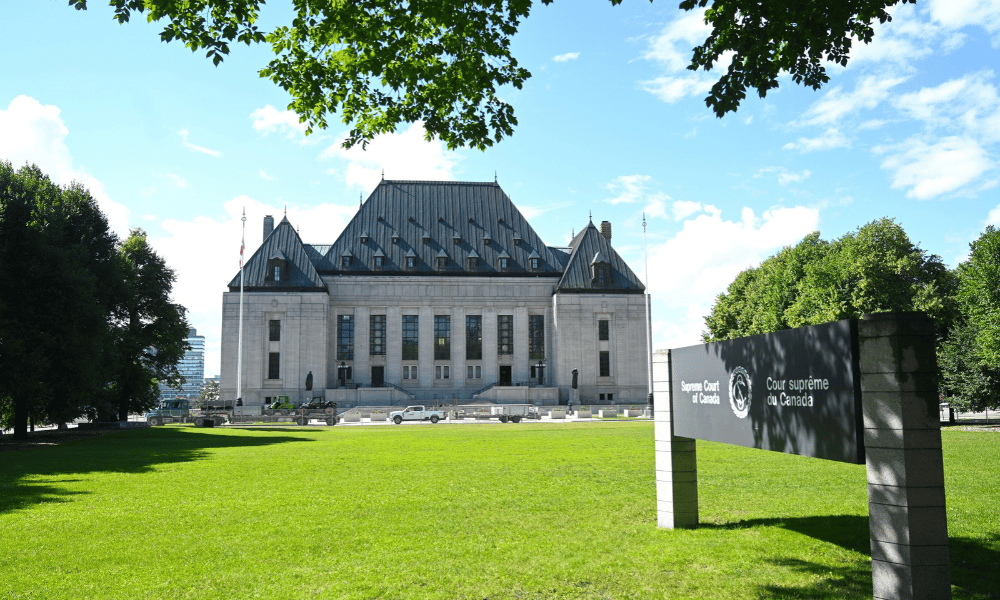
Shaw is part of a team that recently argued one of these cases before the Supreme Court of Canada. In NHK Spring Co., Ltd., et al. v. Tony Cheung, et al., the high court is tasked with considering whether British Columbia’s courts have jurisdiction over a class action lawsuit that alleges Canadian consumers were harmed by a supposed price-fixing scheme that inflated the price of suspension assemblies, a type of computer hard-drive component.
The jurisdictional issues arose because the manufacturers are headquartered in Japan and allegedly made and implemented the price-fixing agreements entirely outside Canada.
The case essentially deals “with the scope of the Competition Act and whether it reaches foreign defendants who are engaged in what we would say is a totally foreign alleged price-fixing conspiracy,” Shaw says.
He points to another class action that engages similar issues. In Clare v. Meta Platforms, two authors and a translator brought a proposed class action against Meta, alleging the tech company used their copyrighted works to train its large language models.
Meta, which is headquartered in California, moved to strike, arguing that the Federal Court lacked jurisdiction over the claims.
This case, and other recent copyright cases involving large language models, raise “really interesting issues of whether Canadian copyright laws have been infringed,” Shaw says. They consider “whether the courts can take jurisdiction solely on the basis that the material is alleged to have been copied under Canadian law, in circumstances where the servers or the data scraping that is alleged is maybe not in Canada at all, or the Canadian presence is minimal to nonexistent.”
Class action lawyers are looking to get licensed in BC
In 2020, Ontario made it harder to get proposed class actions certified when the government amended the province’s Class Proceedings Act. The changes barred Ontario’s courts from certifying proposed class actions unless the plaintiffs could prove that a class proceeding was the best way to resolve the dispute, and that the issues that they alleged were common to all class members predominated over any individual concerns.
These amendments to Ontario’s class actions regime effectively drove more class action filings in other provinces over the next few years, especially BC and Quebec, where certification thresholds are lower. According to data compiled by Torys LLP, both provinces outpaced Ontario in new filings in 2024 and 2025: Ontario saw 48 new filings in 2024 and 42 in 2025, compared to the 60-plus new filings BC saw both years.
Quebec, meanwhile, recorded 67 new class action filings in 2024 and 100 in 2025.
Nick Rodrigo, a Montreal-based partner at Davies Ward Phillips & Vineberg LLP who focuses on class action defence, argues that one result of these trends has been a growing number of non-BC lawyers seeking licences to practise law in BC.
While national class actions – which cover parties located across the country rather than just a single jurisdiction – can technically be filed in any provincial court or the Federal Court, they are usually filed in Ontario or BC. (It is common for a national class to exclude Quebec residents, who are typically covered by a separate, Quebec-only class action lawsuit.)
Many national class actions that could be filed in Ontario have “definitely been migrating to British Columbia” since the 2020 changes to Ontario’s class actions regime, Rodrigo says. This has prompted lawyers in Ontario and Quebec to obtain a BC license to “follow the work.”
Rodrigo says he’s one of those lawyers. “I have become a full member of the British Columbia bar for exactly that purpose: to be able to follow the work to British Columbia, because we could all see what the trend was,” Rodrigo says. “It was not unexpected, and it has certainly been borne out.”
Lawyers who want to temporarily work outside the jurisdiction in which they’re licensed can do so under the Federation of Law Societies of Canada’s national mobility agreement. Under the agreement, lawyers in common law provinces can practise for up to 100 days a year in other common law provinces. (Different rules apply to Quebec, the only province with a civil code.)
However, Rodrigo argues that 100 days go by quickly. The 100-day rule is “applied quite strictly,” he says. If an Ontario lawyer sends or receives an email on any given day “in relation to that piece of litigation in British Columbia, that counts as a day,” Rodrigo explains. “So, you can imagine that with just the email traffic in a typical file, you will hit your 100-days limit quite quickly and quite easily without having done necessarily a lot of heavy substantial work on the file.
“A lot of people for that reason have been seeing the value in becoming members of the Law Society of British Columbia… to avoid hitting any sort of ethical obligations regarding the number of days of practice,” he adds.
On the flip side, Rodrigo observes that increased class action activity in BC has also driven more activity by “homegrown British Columbia firms in the class action practice.” Changes the BC government made to its motor vehicle insurance system a few years ago, aimed at reducing motor vehicle-related litigation, have also prompted many personal injury lawyers in BC to pivot to representing class action plaintiffs instead.
These lawyers are “expanding their practice and becoming more national in scope,” Rodrigo says. “So, we’re seeing them showing up more and more in cases in Ontario and in Quebec.”